


Mục lục bài viết
Materiality in Due Diligence. The Core Principle Determining Transaction Effectiveness in M&A
In complex M&A transactions, the primary challenge is no longer the absence of information, but the ability to process and prioritize it. A typical due diligence exercise may generate extensive volumes of documentation, reports, and identified issues. However, the true value of this process does not lie in the quantity of information reviewed, but in the ability to identify the issues that are determinative to the transaction.
In this context, materiality is not merely an evaluative criterion. It is the central principle that governs both the analytical framework and the structural approach to due diligence.
1. Materiality as a Transactional Standard
Materiality is often misconstrued as a legal or quantitative threshold. In practice, it is a transaction-driven concept.
An issue is considered material not because it constitutes a legal breach, but because it has the potential to affect the fundamental elements of the transaction, including valuation, deal certainty, and the allocation of risk.
Accordingly, materiality must be assessed by reference to its consequences for the transaction, rather than its legal form.
2. The Structural Problem. Information Without Hierarchy
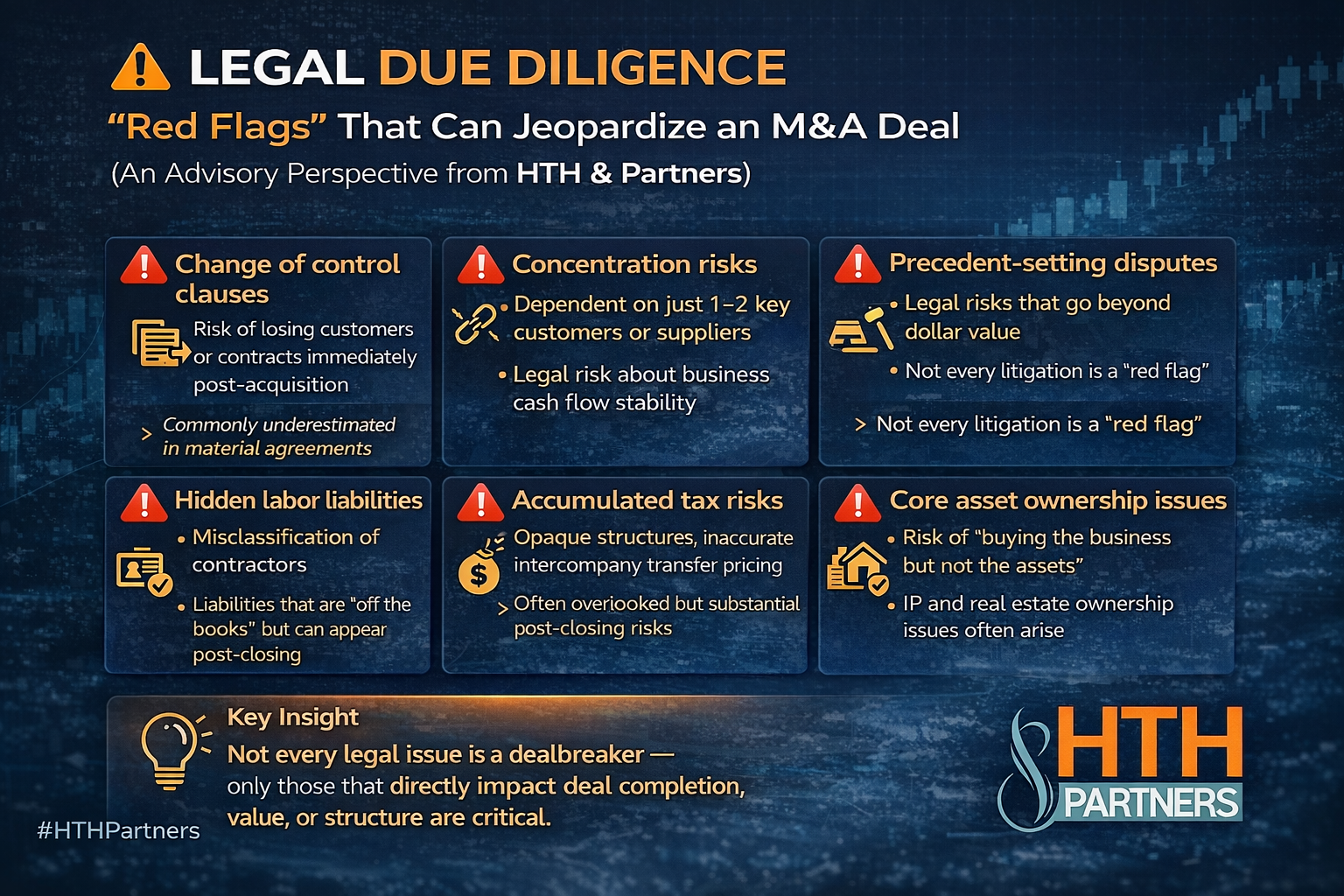
A recurring limitation of due diligence is the absence of a structured hierarchy of risk. Where all issues are identified without differentiation, transaction-critical risks are often obscured by technical or low-impact findings.
The result is that the acquirer may possess significant volumes of information without a clear understanding of what truly matters.
Materiality, in this context, functions as a mechanism for establishing hierarchy. It enables the classification of risks based on their impact on the transaction, thereby facilitating prioritization and informed decision-making.
3. Distinguishing Legal Risk from Transaction Risk
A fundamental analytical requirement in due diligence is the distinction between legal risk and transaction risk.
Legal risk concerns compliance with applicable laws and the enforceability of rights and obligations. Transaction risk, by contrast, concerns the practical impact of an issue on the structure and outcome of the transaction.
These two categories do not always align. A technical legal breach may have limited relevance, whereas a contractual provision affecting control rights may fundamentally alter the nature of the transaction.
Accordingly, the application of materiality requires a shift in analytical focus from legal form to transaction impact.

Materiality in Due Diligence. The Core Principle Determining Transaction Effectiveness in M&A
4. Materiality as a Link Between Due Diligence and Deal Structuring
One of the key functions of materiality is to connect due diligence findings with transaction structuring.
Risks identified through due diligence only acquire practical significance when they are translated into specific mechanisms, such as price adjustments, indemnity protections, representations and warranties, or conditions precedent.
Materiality determines which risks are incorporated into these mechanisms and to what extent. In the absence of a clear materiality framework, such translation becomes inconsistent and ineffective.
5. Quantitative and Qualitative Dimensions of Materiality
Materiality cannot be determined solely by financial metrics. In many transactions, qualitative factors are decisive.
These include the impact on control, regulatory sensitivity, strategic implications, and reputational considerations.
A risk with limited financial exposure may nonetheless be transaction-critical if it affects control or regulatory approval. This underscores that materiality is inherently multi-dimensional and requires both analytical assessment and professional judgment.
6. Materiality in Conditions of Information Asymmetry
Due diligence is inherently conducted under conditions of information asymmetry. The seller controls the scope and timing of disclosure, while the buyer must make decisions based on incomplete information.
In this context, materiality serves as a guiding principle for resource allocation. It enables the acquirer to focus on areas of highest potential risk rather than pursuing procedural completeness.
7. The Greatest Risk. Misjudging Materiality
In many unsuccessful transactions, the issue is not that risks were unidentified, but that they were misclassified.
Misjudging materiality may lead to mispricing, ineffective contractual protection, and the failure to address transaction-critical risks.
Accordingly, materiality is not merely an analytical tool. It is a determinant of the overall quality and effectiveness of the due diligence process.
Conclusion
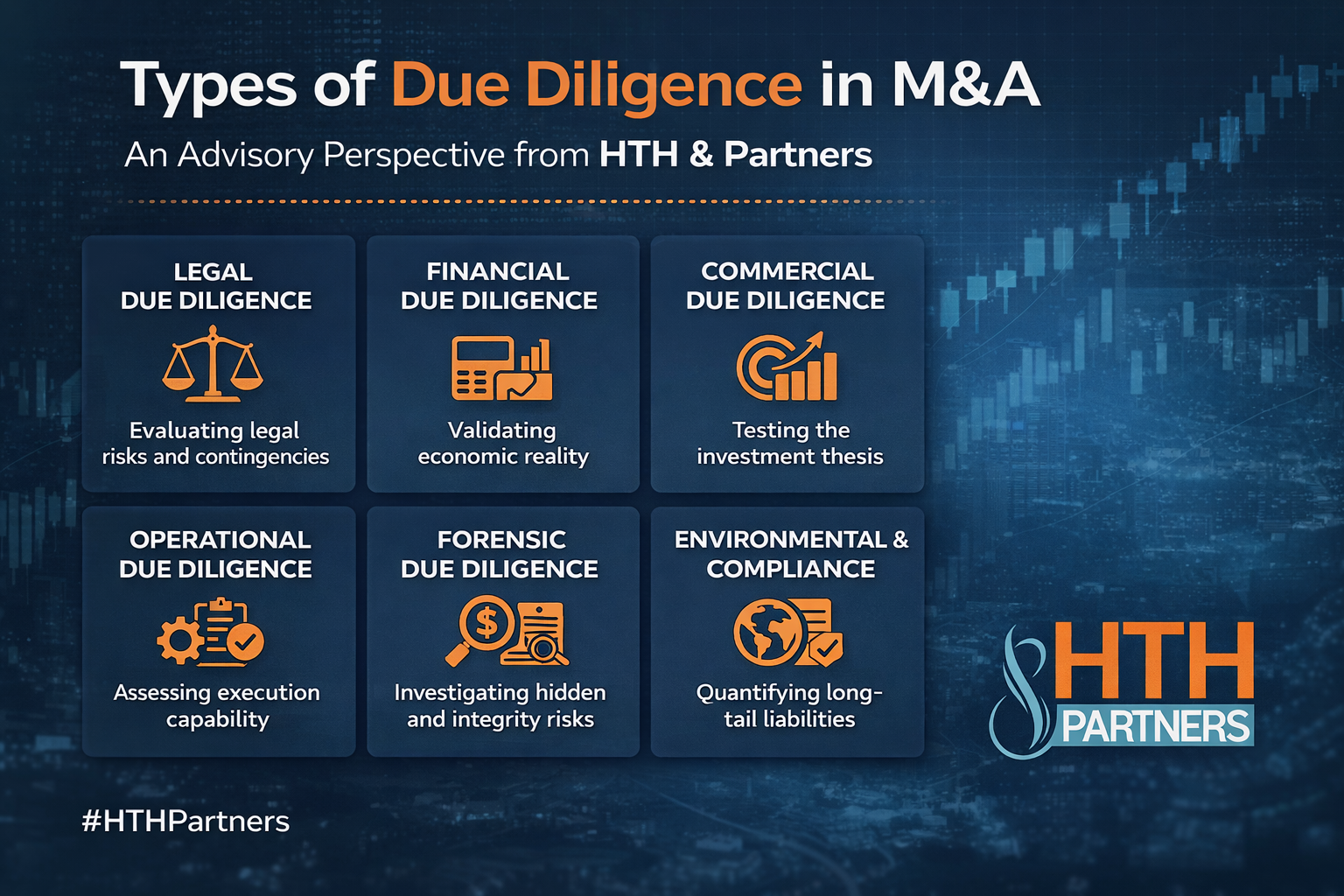
Due diligence is not a process aimed at identifying all issues within a target company. It is a process designed to identify the issues that matter to the transaction, assess their impact, and translate them into appropriate risk allocation mechanisms.
Within this framework, materiality is not a discrete step. It is the central principle that defines the effectiveness of due diligence and, ultimately, the outcome of the transaction.
Disclaimer:
This article is intended for informational purposes only and does not constitute legal advice from HTH & Partners. The content represents the views of HTH & Partners and is subject to change without prior notice.
The legal provisions referenced in this article were valid at the time of publication but may have been amended or repealed by the time of reading. We strongly recommend consulting a qualified legal professional before applying any information contained herein.

The vibes in Sprunki Talking Vineria Wenda and Pinki are immaculate! The music is an absolute banger, and the gameplay feels so smooth. Can’t wait to see more from this creator!